

- March 30, 2026
- by Anoop Jain
Enterprise AI Hiring Made Simple with gNxt Systems: GenAI Talent Solutions in India
Generative AI has moved beyond experimentation and is now becoming a core component of enterprise technology strategy. Organizations across industries are integrating large language models into business workflows to enable intelligent automation, improve decision-making, and enhance customer experiences. From AI-powered copilots to enterprise knowledge assistants and advanced search systems, the scope of adoption is expanding rapidly.
However, as enterprises move from proof-of-concept initiatives to production-scale deployments, a critical challenge continues to slow progress:
Building the right Generative AI team.
Search demand for terms such as “GenAI staffing partner India,” “hire AI engineers India,” “LLM engineers hiring,” and “AI staff augmentation services” reflects a growing realization among enterprises. The bottleneck is no longer access to AI tools or models. It is the ability to assemble the right combination of skills required to design, deploy, and operate AI systems at scale.
This is where most organizations struggle—not because of a lack of talent, but because of how they approach hiring.
Why Enterprise AI Hiring Requires a New Approach
Traditional hiring models were built around well-defined roles and predictable development patterns. Frontend developers, backend engineers, and DevOps specialists operated within structured environments where responsibilities were clearly segmented.
Generative AI disrupts this model entirely.
Unlike conventional software systems, GenAI applications are probabilistic and heavily dependent on data, context, and system design. Their performance is not determined solely by code quality but by how effectively multiple layers of the system work together.
A production-ready GenAI system typically involves model integration, data pipelines, retrieval mechanisms, infrastructure orchestration, and continuous monitoring. Each of these components introduces its own set of complexities, and none of them can operate effectively in isolation.
This is why enterprise AI hiring is no longer about filling roles.
It is about building interconnected capability across the AI lifecycle.
Organizations that continue to rely on traditional hiring approaches often find themselves unable to move beyond early-stage experimentation.
The Core Problem: Misalignment Between Hiring and System Design
One of the most common issues in enterprise AI hiring is the disconnect between how systems are designed and how teams are built.
Many organizations attempt to replicate traditional hiring patterns by bringing in a small set of roles and expecting them to collectively deliver a complete AI solution. While this may work during the initial experimentation phase, it quickly becomes ineffective when systems need to scale.
The reality is that Generative AI systems depend on tightly coupled layers of engineering and data workflows. When hiring is fragmented, ownership becomes unclear, dependencies are overlooked, and critical gaps emerge.
This misalignment leads to several recurring challenges. Enterprises often experience delays when transitioning from proof-of-concept to production. AI outputs may become inconsistent due to weak retrieval or data quality issues. Costs can rise unexpectedly due to inefficient model usage or infrastructure design. Security and compliance concerns may surface late in the process, requiring rework.
These challenges are not caused by the absence of skilled professionals. They are the result of structural gaps in team composition.
To address this, enterprises need to rethink hiring as a system design problem rather than a recruitment activity.
Why India Has Become Central to GenAI Talent Strategy
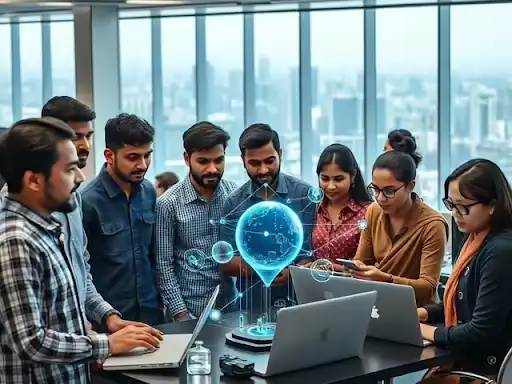
India has emerged as a key destination for enterprises looking to build and scale Generative AI teams. While cost efficiency has historically been a factor, the current shift is driven more by capability and ecosystem maturity.
The country offers a large and continuously growing pool of engineering talent with strong foundations in software development, data engineering, cloud computing, and DevOps. These adjacent skills are critical for building production-grade GenAI systems.
In recent years, India’s technology ecosystem has evolved significantly. Engineers are not only gaining exposure to AI concepts but are actively working on real-world implementations involving LLM integration, RAG pipelines, and AI platform development. This shift has been accelerated by the expansion of Global Capability Centers, where global enterprises are building core engineering and AI capabilities.
As a result, India is no longer just a support hub. It is becoming a center for AI capability development, innovation, and delivery.
For enterprises, this presents a strategic opportunity. However, accessing this talent effectively requires a structured approach to hiring and team building.
What Makes GenAI Talent Difficult to Evaluate
One of the most underestimated challenges in enterprise AI hiring is the difficulty of evaluating Generative AI talent.
Unlike traditional roles, where skills can be assessed through standardized frameworks, GenAI roles require a combination of theoretical understanding and practical experience across multiple domains. Engineers must be able to work with models, data systems, infrastructure, and application layers simultaneously.
The complexity arises because many professionals have exposure to AI tools but limited experience in deploying production-grade systems. Building a prototype using an LLM API is fundamentally different from designing a scalable, secure, and reliable enterprise AI solution.
To better understand this distinction, enterprises should evaluate candidates based on capabilities such as:
- Experience with LLM integration, prompt orchestration, and response optimization
- Understanding of Retrieval-Augmented Generation and retrieval quality
- Familiarity with vector databases, embeddings, and semantic search
- Ability to design and manage data ingestion and transformation pipelines
- Knowledge of cloud infrastructure and scalable system design
- Exposure to monitoring, evaluation, and LLMOps practices
These capabilities reflect real-world delivery experience rather than surface-level familiarity with tools.
Without this level of evaluation, organizations risk hiring for experimentation rather than execution.
How gNxt Systems Simplifies GenAI Hiring
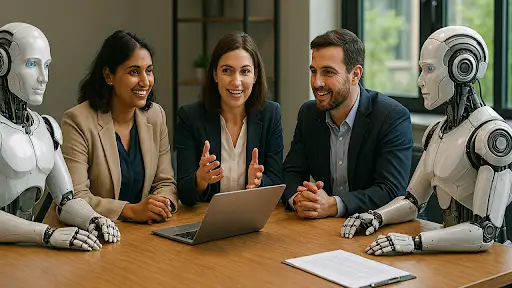
gNxt Systems approaches enterprise AI hiring with a fundamentally different perspective. Instead of treating hiring as a transactional process, it is viewed as a capability-building exercise aligned with business outcomes.
The focus is on designing teams that reflect the architecture of modern GenAI systems. This means identifying the specific capabilities required for a given use case and ensuring that each layer of the system is supported by the right expertise.
gNxt Systems enables enterprises to:
- Build cross-functional AI teams aligned with real-world system requirements
- Access pre-vetted talent with hands-on experience in LLMs, RAG, and AI platforms
- Reduce hiring timelines through structured talent pipelines
- Scale teams dynamically based on project maturity
- Bridge the gap between hiring and delivery
This approach ensures that enterprises are not just hiring faster, but hiring more effectively.
By aligning talent strategy with system design, organizations can move from experimentation to production with greater confidence and speed.
The Role of Flexible Staffing Models in AI Scaling
As Generative AI initiatives evolve, enterprises require flexibility in how they build and manage teams. Traditional full-time hiring models often lack the agility needed to support rapidly changing project requirements.
This has led to the adoption of more flexible staffing approaches that allow organizations to scale capabilities without long-term constraints.
Common models include:
- Staff augmentation for integrating specialized AI talent into existing teams
- Contract staffing for short-term or high-demand skill requirements
- Offshore development teams in India for scalable and cost-effective delivery
- Contract-to-hire models to evaluate talent before long-term commitment
- Build-Operate-Transfer (BOT) models for establishing Global Capability Centers
These models provide enterprises with the ability to align talent acquisition with project timelines, reduce hiring risk, and maintain operational flexibility.
The Future of Enterprise AI Hiring
Enterprise AI hiring is undergoing a structural transformation. Organizations are moving away from role-based hiring toward capability-driven team design. This shift reflects the growing complexity of AI systems and the need for integrated, cross-functional expertise.
In the future, successful enterprises will prioritize building teams that can manage the entire lifecycle of AI systems—from data ingestion and model integration to deployment, monitoring, and continuous optimization.
India will continue to play a central role in this transformation, particularly as enterprises expand their Global Capability Centers and invest in long-term AI capability building.
The focus will increasingly shift from accessing talent to orchestrating talent effectively.
Conclusion
Generative AI has introduced a new level of complexity in enterprise technology—and in enterprise hiring.
The challenge is no longer about finding individuals with the right skills. It is about building teams that can operate as cohesive systems capable of delivering reliable, scalable AI solutions.
This is where gNxt Systems brings measurable value.
By aligning hiring strategies with system architecture and delivery requirements, enterprises can simplify AI hiring, reduce risk, and accelerate innovation.
In the evolving landscape of Generative AI, success will not be determined by who adopts the technology first.
It will be determined by who builds the right teams to scale it.
Q1. How do enterprises hire Generative AI engineers in India?
Q2. Why is it difficult to hire GenAI talent right now?
Q3. What roles are needed for a production-ready GenAI team?
Q4. Is staff augmentation a good model for AI hiring?
Q5. What should companies look for in a GenAI staffing partner in India?
About Author

CEO at gNxt Systems
with 25+ years of expertise, Mr. Anoop Jain delivers complex projects, driving innovation through IT strategies and inspiring teams to achieve milestones in a competitive, technology-driven landscape.
Table of ContentsToggle Table of ContentToggle