- April 22, 2026
- by Anoop Jain
Post-GPT-5 Reality Check: Do You Have the Talent to Actually Use What’s Coming?
The Models Arrived. Your Team Didn’t.
We’re living through the most intense capability sprint in AI history — and most companies are watching it happen from the sidelines. Not because they lack ambition or budget. Because they don’t have the people.
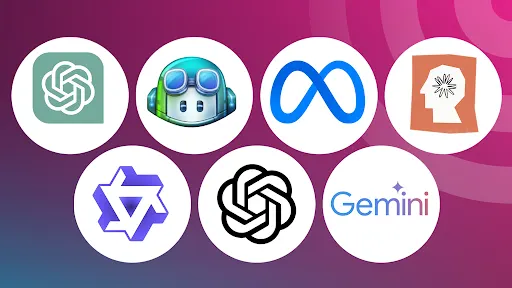
In March 2026 alone, three frontier models dropped within weeks of each other: OpenAI’s GPT-5.4, Google’s Gemini 3.1 Ultra, and xAI’s Grok 4.20. Anthropic’s Claude Opus 4.6 and Sonnet 4.6 landed just before that. On the open-source side, Mistral, Zhipu AI, and Alibaba released models delivering frontier-competitive performance at a fraction of the API cost. The pace has compressed the competitive gap between labs to a matter of weeks.
These aren’t incremental upgrades. GPT-5.4 scored 75% on OSWorld — a benchmark that tests how well AI can operate desktop environments — surpassing the human expert baseline of 72.4%. It ships with built-in computer use capabilities, a one-million-token context window, and unified coding performance that eliminates the need for separate specialist models. It achieved a 33% reduction in factual errors over its predecessor and set records across professional knowledge work benchmarks.
Meanwhile, the Model Context Protocol — Anthropic’s open standard for connecting AI systems to external tools and data — crossed 97 million installs in March 2026, cementing its transition from experimental spec to foundational infrastructure. The Agentic AI Foundation, formed under the Linux Foundation in December 2025 with contributions from Anthropic, OpenAI, and Block, now has every major AI provider shipping MCP-compatible tooling.
The technology isn’t waiting for anyone. Agentic AI is production-ready. Multi-model orchestration is real. Computer use is crossing from benchmark curiosity to operational capability. And the uncomfortable question facing every company with an AI roadmap is no longer “Is this technology ready?” It’s: “Do we have anyone who knows how to actually build with this?”
For most companies, the honest answer is no.
The New Skill Landscape: Everything Changed in Six Months
The AI skills your team was hired for eighteen months ago don’t map to what the market demands today. This isn’t a slow drift. It’s a tectonic shift.
Consider what “AI engineering” actually means in April 2026 versus what it meant a year ago. Twelve months back, companies were hiring GenAI engineers primarily to build chatbots, simple RAG pipelines, and basic LLM integrations. The skill profile was relatively straightforward: familiarity with LangChain, experience calling the OpenAI API, basic prompt engineering, and enough Python to wire things together.
That profile is now table stakes. It’s the baseline, not the differentiator. The work that actually matters in 2026 — the work that separates companies shipping real AI products from companies still running pilots — requires a fundamentally different skill set.
Agentic architecture design. AI agents aren’t chatbots with extra steps. They’re autonomous systems that plan, reason, use tools, and execute multi-step workflows without constant human supervision. Building them requires understanding multi-agent orchestration frameworks — OpenAI’s Agents SDK, CrewAI, LangGraph, AutoGen — along with tool-calling patterns, guardrail design, fallback logic, and the ability to reason about failure modes in systems where the AI is making real decisions with real consequences.
MCP and connectivity infrastructure. With MCP becoming the universal standard for how AI agents connect to enterprise tools and data sources, engineers now need to understand progressive discovery patterns, server design, cross-app access layers, and the security and governance implications of giving AI systems authenticated access to production databases, CRM systems, and internal APIs. This is a fundamentally new discipline that didn’t exist two years ago.
Production-grade model deployment. The gap between “it works in a notebook” and “it works at scale in production with monitoring, drift detection, automated rollback, and compliance logging” has never been wider. MLOps was already a scarce skill. Now it needs to account for multi-model routing, agentic workflow observability, and the kind of real-time performance monitoring that autonomous systems demand.
Computer use and browser automation. With GPT-5.4’s computer use capabilities crossing the human baseline, building AI systems that can navigate desktop environments, interact with web applications, and execute complex digital workflows is no longer science fiction. But it requires engineers who understand both the AI side and the systems integration side — a rare combination.
AI governance and compliance. The EU AI Act’s compliance obligations begin phasing in from August 2026. Every AI system deployed in or serving European markets needs to meet specific transparency, accountability, and risk management requirements. This demands engineers who understand not just how to build AI systems, but how to make them auditable, explainable, and compliant — and who can implement those requirements without destroying performance.
The teams that were “AI-ready” in 2024 are not AI-ready in 2026. The skills expired. The landscape shifted. And the hiring market didn’t shift with it.
The Talent Gap Just Became a Canyon
This would all be manageable if companies could simply hire for these new skills. They can’t.
The global AI talent shortage has reached a demand-to-supply ratio of 3.2 to 1 across critical roles. There are roughly 1.6 million open AI positions globally and only about 518,000 qualified candidates to fill them. AI salaries are inflating at 15-20% annually, with US senior GenAI engineers commanding $180K-$250K in base compensation alone.
But the shortage in general AI skills is nothing compared to the shortage in the specific, emerging skills that 2026 actually demands. How many engineers in the world have production experience building multi-agent systems with MCP integration? How many have deployed agentic workflows with proper governance, monitoring, and compliance? How many have built computer-use-enabled AI systems that operate reliably in enterprise environments?
The honest answer: vanishingly few. These skills are so new that they barely have standardized job titles, let alone a deep talent pool. The engineers who have them are already embedded at frontier AI companies or are commanding contract rates that price out most mid-market organizations.
And the traditional hiring model makes this worse, not better. The average time to fill a specialized AI role sits between four and six months. In a field where the core frameworks and best practices evolve quarterly, a six-month hiring cycle means you’re permanently behind. By the time your new hire starts, the landscape they were hired for has already shifted.
This is the canyon. On one side: AI capabilities that are genuinely transformational, available right now, getting better every month. On the other side: your team, skilled and committed, but trained for a world that’s already in the rearview mirror. And the gap between those two sides is widening faster than any hiring process can close it.
Why “We’ll Upskill Our Team” Isn’t Enough
The instinct is reasonable: train the team you have. Invest in upskilling. Send people to courses. Run internal hackathons. There’s nothing wrong with this — in fact, it’s essential for long-term capability building.
But it won’t solve the immediate problem, and here’s why.
The skills gap in 2026 isn’t a knowledge gap. It’s an experience gap. Your data scientist can take a six-week course on agentic AI frameworks and understand the concepts. But understanding how to design a multi-agent system is categorically different from having built one in production, debugged the edge cases, handled the failure modes, and navigated the security implications.
The difference between “I’ve studied MCP” and “I’ve built three MCP servers, integrated them with enterprise systems, and handled the authentication and governance challenges in a regulated environment” is the difference between reading about surgery and performing it. Both are necessary over a career. But right now, today, for the initiative that’s on your roadmap for Q3, you need the surgeon.
Upskilling builds capability over six to twelve months. Your roadmap needs capability in six to twelve weeks. These timelines don’t align, and pretending they do is how AI initiatives quietly die — not from lack of strategy, but from lack of execution capacity.
The Augmentation Imperative: Why the Fastest Companies Aren’t Waiting
The companies that are actually shipping with the latest AI capabilities — deploying agentic workflows, building MCP-connected systems, leveraging the new frontier models in production — aren’t doing it by winning some impossible hiring race. They’re doing it by augmenting.
AI staff augmentation has become the dominant strategy for bridging the gap between what the latest models can do and what your current team can build. The model is simple: instead of spending six months trying to hire a full-time agentic AI architect (who may not exist in your local market at any salary), you embed one into your team for the duration of a specific project.
This specialist has already built the systems you’re trying to build. They’ve already navigated the MCP integration challenges, the multi-agent orchestration patterns, the production deployment complexities. They join your standups, work in your codebase, follow your processes. And critically, they transfer knowledge to your internal team as they work — so when the engagement ends, your permanent engineers aren’t just maintaining a system someone else built. They understand it deeply enough to extend and improve it.
The speed difference is dramatic. A six-month hiring cycle compresses to a two-week placement. A four-month ramp-up period shrinks to days, because you’re bringing in someone who’s done the exact work before. And the cost structure is fundamentally more rational — you’re paying for specialized capability during the specific window when you need it, rather than carrying a permanent headcount for skills that may be intensely needed for three months and sporadically needed after that.
This is especially critical in 2026 because the required skills are evolving so rapidly. The agentic AI frameworks that matter today may be different from the ones that matter in twelve months. The MCP ecosystem is growing and changing weekly. Building a permanent team around a skill set that’s this volatile is like building a house on shifting sand. But augmenting with specialists who stay at the cutting edge across multiple engagements — who bring cross-pollinated expertise from building these systems at multiple companies — gives you access to current-state knowledge without the risk of permanent obsolescence.
What the Post-GPT-5 AI Team Actually Looks Like

The companies successfully navigating this era aren’t structuring their AI teams the way they did two years ago. The model has evolved, and it looks like this:
The permanent core (3-5 people): Your AI strategy lead who understands the business and owns the roadmap. A senior engineer or two who know your data architecture, your systems, and your institutional context. Maybe a data engineer who maintains the pipelines. These people are irreplaceable because their value comes from business context and institutional knowledge that no outside specialist can replicate.
The augmented specialist layer (rotating, project-based): An agentic AI architect for the twelve-week sprint building your autonomous workflow system. An MCP integration specialist for the six-week engagement connecting your AI agents to internal tools and data. An MLOps engineer for the eight-week pipeline buildout. A compliance engineer for the six weeks before your EU AI Act regulatory deadline. A fine-tuning specialist for the four-week model optimization engagement.
The knowledge bridge (built into every engagement): Every augmented specialist is expected to pair-program with internal engineers, document their decisions, create operational runbooks, and conduct structured handoff sessions. The goal isn’t dependency. It’s capability transfer. When the specialist leaves, the internal team should be able to maintain, extend, and improve what was built.
This hybrid model delivers something that neither a pure in-house team nor a pure augmentation model can achieve alone: the institutional knowledge and strategic continuity of permanent staff, combined with the cutting-edge specialized expertise and speed of augmented specialists.
It’s also the only model that can keep pace with the rate of change. When the next frontier model drops — and it will, probably within months — the augmented layer can rotate in specialists who already understand the new capabilities. Your core team provides the context. The augmented specialists provide the execution. Together, they ship.
The Real Question: What Are You Waiting For?
Let’s be direct about the situation every company with an AI roadmap faces right now.
The capabilities are here. GPT-5.4 can use computers better than most people. Claude Opus 4.6 leads on code generation and PhD-level reasoning. MCP has become the universal connectivity standard. Agentic AI is in production at companies that acted six months ago. Frontier models are releasing monthly. The technology has never been more capable.
Every organization surveyed has agentic AI on their 2026 roadmap. Not most. Every single one. The gap isn’t ambition. It’s execution.
And execution is a talent problem.
You can keep posting job descriptions for roles that take six months to fill, for skills that evolve every quarter, in a market where qualified candidates are outnumbered three to one. That’s one path. It’s the path most companies are on. It’s also the path that guarantees you’ll be perpetually behind the technology curve, shipping last year’s capabilities while your competitors ship this year’s.
Or you can do what the fastest-moving companies have already figured out: own the core, augment the rest. Embed the specialists who’ve already built the systems your roadmap describes. Ship in weeks instead of waiting months. Transfer knowledge so your team gets stronger with every engagement. And stay current in a field that punishes anyone who stands still.
The models aren’t going to slow down and wait for your hiring pipeline to catch up. Neither is the market. Neither are your competitors.
The talent to use what’s coming is available right now. The question is whether you’ll access it through a model designed for the speed of 2026, or keep running a hiring playbook built for a world that no longer exists.
References & Sources
- OpenAI — “Introducing GPT-5.4” (March 5, 2026) — https://openai.com/index/introducing-gpt-5-4/
- Wikipedia — “GPT-5.4” (April 2026) — https://en.wikipedia.org/wiki/GPT-5.4
- Mean CEO Blog — “New AI Model Releases News | April 2026 (Startup Edition)” (April 2026) — https://blog.mean.ceo/new-ai-model-releases-news-april-2026/
- NxCode — “GPT 5.4 Complete Guide 2026: Features, Pricing, Benchmarks & How to Use” (March 2026) — https://www.nxcode.io/resources/news/gpt-5-4-complete-guide-features-pricing-models-2026
- Frank’s World of Data Science & AI — “Envisioning the Future: The Role of MCP in Agent Development by 2026” (April 2026) — https://www.franksworld.com/2026/04/20/envisioning-the-future-the-role-of-mcp-in-agent-development-by-2026/
- Deloitte Insights — “Agentic AI Strategy” (February 2026) — https://www.deloitte.com/us/en/insights/topics/technology-management/tech-trends/2026/agentic-ai-strategy.html
- Insentra — “Agentic AI Takes the Wheel 2026” (February 2026) — https://www.insentragroup.com/us/insights/not-geek-speak/generative-ai/agentic-ai-takes-the-wheel-a-deep-dive-into-2026/
- Kellton — “Agentic AI Trends 2026: Future of Agentic AI Innovations” (2026) — https://www.kellton.com/kellton-tech-blog/agentic-ai-trends-2026
- Second Talent — “Top 50+ Global AI Talent Shortage Statistics 2026” (April 2026) — https://www.secondtalent.com/resources/global-ai-talent-shortage-statistics/
- SPECTRAFORCE — “AI in Hiring 2026: Five Roles Driving Demand and the Supply Problem Behind Them” (April 2026) — https://spectraforce.com/blog/technology-ai-in-hiring/ai-hiring-trends-2026/
Frequently Asked Questions (FAQs)
Q1. What new AI skills do companies need in 2026 that didn't exist two years ago?
Q2. Why can't companies just train their existing teams on agentic AI and MCP?
Q3. How fast are frontier AI models releasing in 2026, and why does it matter for hiring?
Q4. What is the Model Context Protocol (MCP) and why does it affect AI staffing?
Q5. How does AI staff augmentation help companies keep pace with rapidly evolving AI technology?
About Author

CEO at gNxt Systems
with 25+ years of expertise, Mr. Anoop Jain delivers complex projects, driving innovation through IT strategies and inspiring teams to achieve milestones in a competitive, technology-driven landscape.
Table of ContentsToggle Table of ContentToggle